Trump Raises Global Tariffs to 15% After Supreme Court Strikes Down Emergency Trade Measures
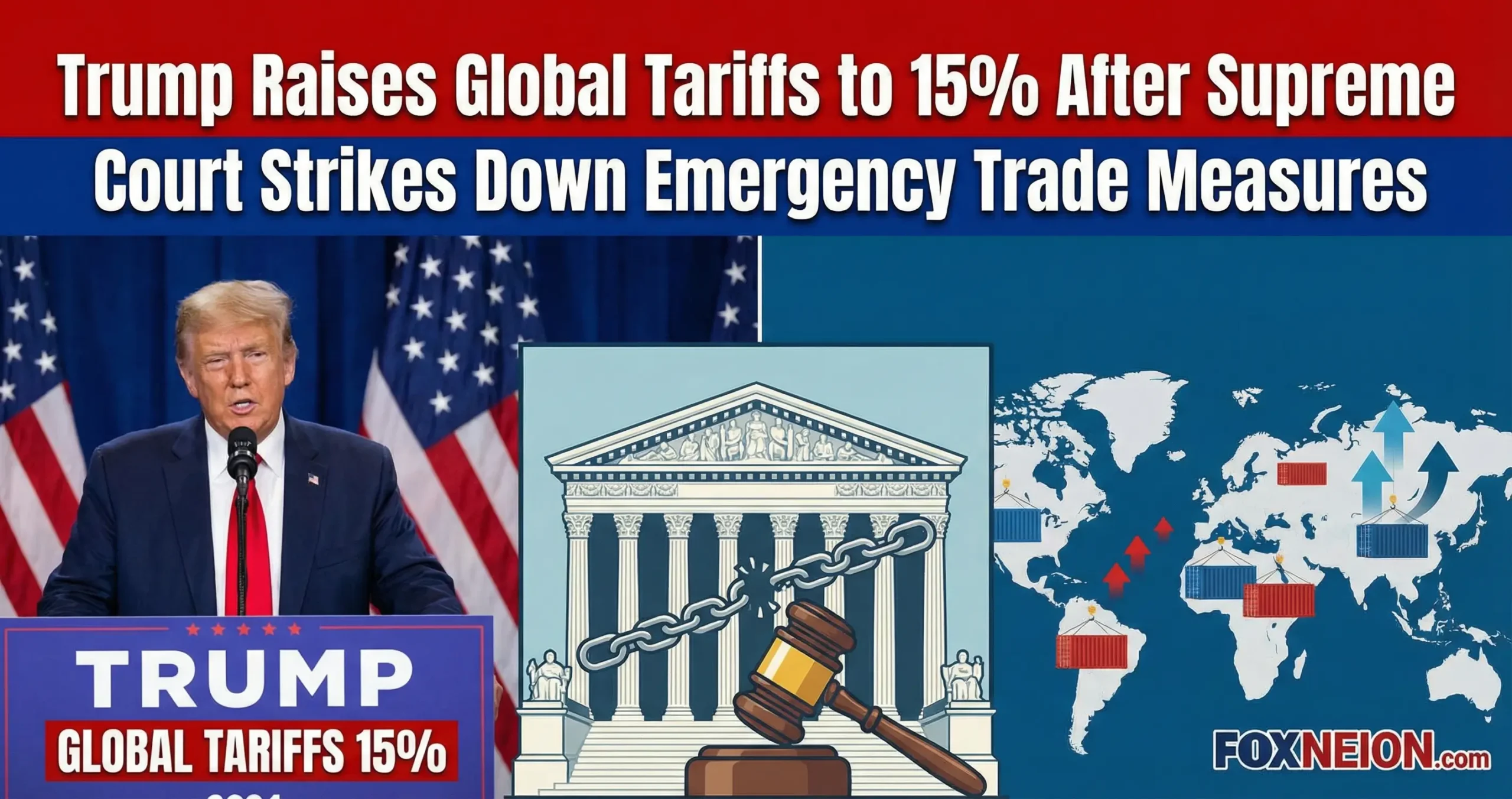
Washington, D.C. – US President Donald Trump has announced an increase in global tariffs from 10% to 15%, just one day after the US Supreme Court struck down sweeping trade duties imposed under emergency powers. The decision marks a dramatic escalation in trade policy and sets the stage for a renewed legal and political battle over presidential authority in economic matters.
Trump Announces 15% Worldwide Tariff Hike
In a post on Truth Social, Donald Trump confirmed that the 10% worldwide tariff would be raised to 15%, effective immediately. Trump criticized the court’s ruling, calling it “ridiculous” and “extraordinarily anti-American.” He stated that the administration would soon determine and implement new tariffs that are “legally permissible” while continuing what he described as an “extraordinarily successful” economic agenda. The president argued that many countries have been “ripping” the United States off for decades and said the tariff increase would ensure fair trade practices moving forward.
Supreme Court Strikes Down Trump’s Emergency Tariffs
On Friday, the Supreme Court of the United States ruled that the Trump administration exceeded its authority by using emergency powers to impose broad trade tariffs. The court determined that the president improperly invoked the International Emergency Economic Powers Act (IEEPA), a statute designed for extraordinary national emergencies, not sweeping economic policy changes. In its ruling, the Court stated that while the executive branch has significant authority in matters of national security and foreign policy, the imposition of wide-ranging tariffs requires clearer congressional authorization.
Why Did the Supreme Court Strike Down the Tariffs?
The administration had justified the tariffs under the IEEPA, which grants presidents special powers during national emergencies. However, the justices ruled that:
- The situation cited did not meet the threshold of a true national emergency.
- The law was not intended for broad-based trade restructuring.
- The executive branch cannot bypass Congress when enacting major economic policy shifts.
The decision represents a major check on presidential power and reinforces the constitutional balance between Congress and the White House.
Economic and Political Impact
The tariff hike to 15% is expected to have significant global economic implications:
1. Global Trade Tensions
Trading partners may retaliate with counter-tariffs, potentially escalating international trade disputes.
2. Impact on US Consumers
Higher tariffs often lead to increased prices on imported goods, potentially affecting American consumers and businesses.
3. Market Reactions
Financial markets may react with volatility as investors assess the legal uncertainty and potential trade disruptions.
What Happens Next?
President Trump indicated that over the coming months, the administration will review and issue new tariffs within what he described as “legally tested” boundaries. Legal experts suggest further court challenges are likely if the new tariffs are seen as circumventing the Supreme Court’s ruling. Congress could also step in, either by granting clearer authority or by limiting executive trade powers further.
Conclusion
The clash between Donald Trump and the Supreme Court of the United States marks a pivotal moment in US trade policy and constitutional law. With tariffs now set to rise to 15%, global markets, lawmakers, and international partners are closely watching the next steps in what could become a prolonged legal and economic battle.
As the administration moves forward with revised trade measures, the balance of power between the presidency and Congress remains firmly in the spotlight.